Monday, July 16, 2012

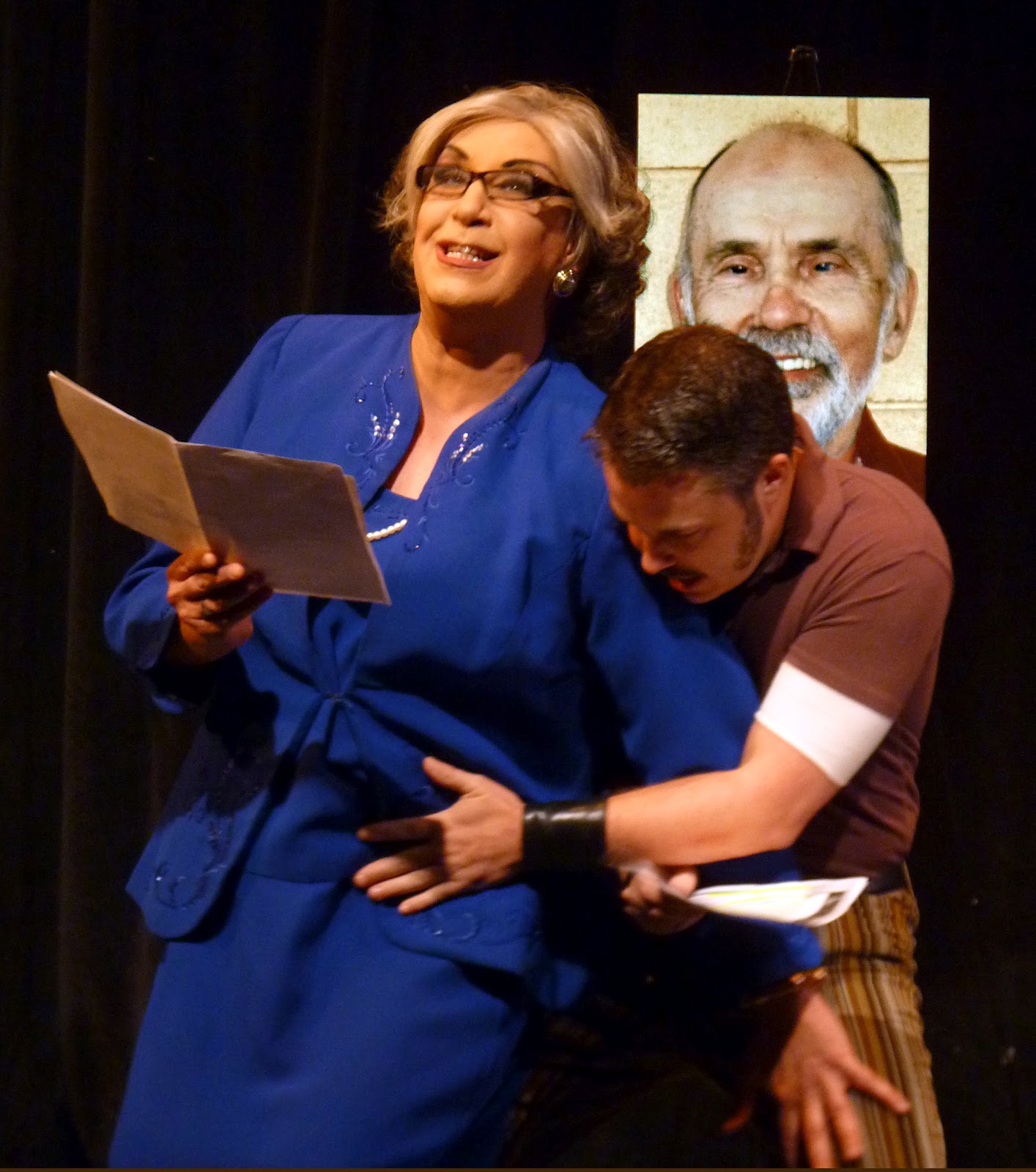
From 7 July 2012 Memorial for George Birimisa


A few photos from the event:

Click on first picture to read program:


Monday, July 09, 2012

The Unmanned Drone Bomber Form of Communication and Government


Any medical care is better than no medical care.  And the people who work for the V.A. are admirable.  You get a succession of new doctors whose training includes two or three years as your “gateway” physician.  An admirable web site designer created the V.A. medical website that dazzles with its invitation to several kinds of information.  I was delighted when I heard that it was an easy way to communicate with your gateway student physician, but I still have not been able to find my way through its maze of wonders.  Until then I continue to do what most veterans probably do:  I call the phone number one receives on notices, which means that for many hours over the years I have listened for a half hour to the message, “All representatives are busy at this time. Please hold…” etc. 
How many millions of Americans could be employed once again if they returned to the work that was replaced by some unwieldly phone tree that never addresses the question you have? Those who control their patients, customers, citizens in this way would soon eliminate the impersonal phone system if they had to call their own numbers:  That would teach them what is lacking – empathy (I introduce my “unmanned drone bomber” metaphor). 
One of the doctors I see at the V.A. gave me his email address.  It takes us 60 seconds of communication time if I need a prescription renewed or need to ask a question about the effects of a medicine.  With all other doctors I must listen for a half hour to that maddening (and hypocritical) message that someone is eager to help me (feel free to equate with the repetitious speeches of politicians).
I have resorted to writing a letter when I need to communicate with a physician, much more time-consuming than sending an email or making a phone call, but less time-consuming, and maddening, than listening for a large portion of my life to the political lie of the unmanned drone form of communication.  Apply the metaphor to all things American and see often it fits perfectly – and how it is the effect of eliminating all human beings from a process.  In the most extreme example, imagine the homeless trying to send a personal message to the President.  But no need to go that far.  Consider any citizen dealing with government, or any customer dealing with a vendor.  If not a phone maze, there will be some other way to prevent human-to-human communication.  They are mistaken when they believe that removing the personal saves them money and provides convenience for anyone.  We are all the victims of the unmanned drone bomber form of communication.
But apply it to the real thing, the use of unmanned drone bombers by the military.  Being a military man, of course, General Powell on the Tavis Smiley Show said that it is a desirable new form of weapon, with it being an unavoidable side effect that noncombatants, including women and children, will be killed, while, fortunately, it will spare the lives of the people using these weapons at distance, impersonably.  The warrior always removes the personal, and General Powell does not yet have the empathy to imagine how it will be when unmanned drone bombers are used by others on the U.S.  Then everyone will take it personally. 
We have become a society controlled by those who think abstractly, for instance, by the figures on a ledger, who themselves cannot see that the figures on the ledger are humans running for their lives.  We are all trying to dodge that system that finds it wonderful to simply push a button or that writes out masses of workers with a pen.  Apply my metaphor generally and see if it does not fit most of the situations in our lives.

Thursday, June 21, 2012

Beyond the Bonzais


Straying from routine walk and entering Lakeside Park by Lake Merritt in Oakland, I found the Arboretum and the Bonzai Garden were both closed, but revisited some special spots beyond:


Call Me Kuchu

Telling people about the documentary "Call Me Kuchu" is apt to elicit the response that they are glad they did not see it and that they hope they never will see it, but that would deprive them of seeing heroic people who, we must hope, will ultimately triumph against the murderous homophobia in Uganda.  Their efforts have so far blocked the Anti-Homosexuality Bill, which would make homosexuality punishable by death.
While there is a wooden-headed bigotry in the country's government, it is also disturbing to see  a ranting American evangelist building up anti-gay hysteria among the Ugandans.
The beautiful spirit of the leader David Kato is cut down mid-way through the documentary -- here, from an article, is David Kato, with his mother in the background:


The more retiring Long Jones is forced to change his nature after Kato's death and become a leader himself.  When some of those associated with the film appeared on the Castro Theatre stage, after the film was shown at the 2012 San Francisco Gay and Lesbian Film Festival, the standing ovation went on and on, and finally affected Long Jones -- such a tall figure -- so that he had to turn his back for a moment to cry, and was comforted by one of the directors.  My photos, attempted from the far back of the theater, are completely inadequate, but just to give you an impression of a very special and very moving event,  from left to right (If you like, click on the photo, you may enlarge it, while the warning you that the quality is primitive):

Left to Right:  Signer for the deaf; one of the directors, Katherine Fairfax Wright; two from the film:  Bishop Senyonjo and Long Jones; director Malika Zouhali-Worrall; a Festival official whose name I missed.  


The two women who made the film are amazing.  While both are identified as directors, and both may have helped direct, a friend seemed to know that Katherine Fairfax Wright, too shy to speak much, was more the cinematographer:


Identified also as a director, the friend said that Malika Zouhali-Worrall was also the producer:


Here she is listening to Long Jones:


Here Bishop Senyonjo (a compassionate force in the documentary, if somewhat long-winded as preachers can be, upon receiving this award) is honored with a proclamation from the city, and he will be one of the grand marshals at this year's Pride Parade:


Here are some more of the very rough photos, followed by one of the web sites about the film:


http://filmbalaya.com/2012/06/11/frameline-2012-film-festival-call-me-kuchu-jobriath-a-d-and-me-at-the-zoo-reviews-and-trailers